



Pakistan

Blasphemy Law Remains an Impediment to Religious Freedom in Pakistan

Washington D.C. — The U.S Commission on International Religious Freedom (USCIRF) reiterates it’s call for the U.S. government to work with Pakistani officials to take measurable steps to amend or repeal its blasphemy law. Recently the Pakistani government banned the Tehreek-e-Labbaik Pakistan (TLP). The TLP has incited violent mobs to intimidate and attack religious minorities, even calling for the death penalty as punishment for violating blasphemy laws. This impacts members of the Christians, Ahmadiyya Muslims, and others.

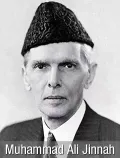
Minority Concern Urges Government to Make Pakistan a Pluralistic State by Promoting Jinnah’s Historic Speech of 11 August 1947

LAHORE, PAKISTAN (1 December 2025) — At its annual meeting in Lahore, Minority Concern urged the Government of Pakistan to take concrete steps toward building a pluralistic and inclusive society by actively promoting Quaid-e-Azam Muhammad Ali Jinnah’s landmark address to the first Constituent Assembly on 11 August 1947, delivered just three days before the creation of Pakistan.

Minority Concern Urges Immediate Government Action to Stop Forced Conversion and Marriage of Young Non-Muslim Girls in Pakistan

Faisalabad, Pakistan (24 November 2025) — During the annual gathering of Minority Concern’s Faisalabad chapter, the organisation expressed deep concern over persistent reports of forced conversions and coerced marriages of underage Christian girls in Pakistan, calling for urgent and coordinated action by Pakistani authorities, international human rights bodies, and civil society organisations.

USCIRF Condemns Rising Attacks on Ahmadiyya Muslims in Pakistan

Washington D.C. – The U.S. Commission on International Religious Freedom (USCIRF) strongly condemns increasing attacks against members of the Ahmadiyya Muslim community in Pakistan. On May 16, Dr. Sheik Mahmood, an Ahmadi Muslim man, was shot and killed in Sargodha. Earlier this month, on Sunday, May 11, Tahir Mahmood and Ijaz Hussain, both Ahmadi Muslim men, were arrested in Karachi for offering Friday prayers. During their court appearance on May 12, both men were violently dragged from the courtroom and assaulted by mobs, resulting in the death of Tahir Mahmood.

MEDIA’S POWER: Uplifting or Undermining Religious Freedom

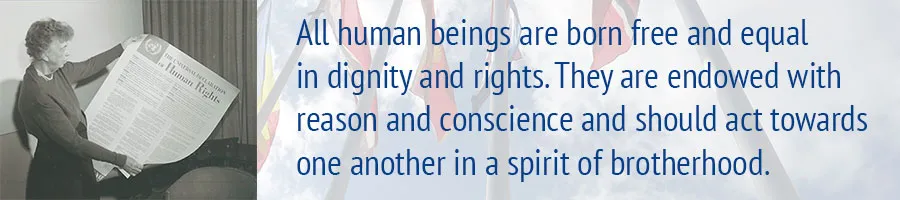
By Peter Zoehrer, Executive Director, FOREF Europe — On World Press Freedom Day, we celebrate journalism’s role in holding power to account and amplifying the voices of the vulnerable. Article 19 of the Universal Declaration of Human Rights (UDHR) enshrines freedom of expression as a pillar of democracy. But this freedom is not without consequence. When media outlets stigmatize religious minorities, they don’t just shape narratives—they shape realities.

State religious intolerance in Pakistan: a sad reality

Our partner CAP Liberté de Conscience, which has always been at the forefront in denouncing violations of freedom of belief that affect religious minorities, published an article, which we republish below, in which it stigmatises the connivance between the Pakistani police and the extremist zelot group Tehreek-e-Labbaik Pakistan (TLP) in the use of violence against Ahmadiyya Muslim communities, their places of worship and even the graves in their cemeteries. The role of social media in spreading hate speech against Ahmadiyya Muslims is also denounced.

At least 28 Ahmadi Muslims arrested in Punjab Province, days before the start of Ramadan

The International Human Rights Desk (IHRD) of the Ahmadiyya Muslim Community in the UK reports that at around 1.30pm on 28 February members of the Tehreek-e-Labaik (TLP) extremist group stormed an Ahmadiyya place of worship in Daska, Sialkot District, chanting anti-Ahmadi slogans at a group of Ahmadis who had gathered for Friday prayers. Police were called to the mosque, however they proceeded to arrest 23 of the Ahmadis who were present, including three minors aged 11, 14 and 17.

Religious Freedom starring at the National Peace Symposium 2024

On March 9, 2024, in London, the Ahmadiyya Muslim Jama'at (AMJ) hosted the 18th National Peace Symposium. Among the many guests were Alessandro Amicarelli, Chairman of FOB, and Marco Respinti, member of FOB's Advisory Council and editor-in-chief of the academic publication The Journal of CESNUR (Center for Studies on New Religions) and the CESNUR project  Bitter Winter: A Magazine on Religious Liberty and Human Rights.

Government faces ire for opposing Women’s March in Pakistan

By Aftab Alexander Mughal — Civil-society organisations, including women rights groups, condemned the government minister’s proposal to ban ‘Aurat (women) March.’ Conservative politicians and a section of the media are also supporting the said proposal. Various women’s marches, rallies and events are scheduled to be held on 8 March on the International Women’s Day.

Something is changing in Pakistan

In the following article, Aftab Alexander Mughal, director of Minority Concern Pakistan, informs us of the position taken by the authoritative Council of Islamic Ideology against the violence for blasphemy that shamefully bloody Pakistan, fueling the hope that ignorance and superstition will give way to the knowledge and respect of the dictates of the Koran.

Another Christian sentenced to death on blasphemy charges in Pakistan

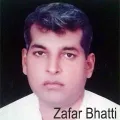
CLAAS (06.01.2022) – A Christian man, Zafar Bhatti, 58, has been sentenced to death by the Pakistan session court of Rawalpindi, after being charged with blasphemy in 2012.

He is accused of sending blasphemous text messages from his phone but has always denied the allegation against him.

Bhatti faced a difficult situation when in the same year the District Bar Association Rawalpindi passed a resolution that no lawyers of District Bar Association would appear in any case under Section 295 of the Pakistan Penal Code on behalf of any accused.

Human Rights Day: a Story to Think About

How far can the hatred generated by intolerance towards religious minorities go? The article of which we repropose here below some excerpts provides an eloquent answer. In this case to pay the costs of the murderous hatred of ignorant Muslim crowds are faithful Hindus and Christians, i.e. the faithful of two of the major religions on Earth, in the Islamic world, however, they are often in the minority.

Persecution of Ahmadis takes another life in Peshawar, Pakistan

CAP LC — It is with agonizing heart-rending grief that we come to you with the horrible news of the brutal target killing of an Ahmadi Mr. Kamran Ahmad in Peshawar, Pakistan. On November 09, 2021 at around 05:30 PM Mr. Kamran Ahmad an Ahmadi of age 40 years was shot dead by an unknown assailant in Peshawar, Pakistan. He has left behind a widow and 3 minor children. He was an employee at one of the factories on Industrial Estate Kohat Road, Peshawar. He was at work when an unknown man opened fire at him.

Interview with Juliet Chowdhry on the occasion of the launch of Asia Bibi's memoirs

Back in late 2018 we published an article on the release of Asia Bibi after 9 years of imprisonment for blasphemy due to the fact that she, a Christian woman, dared to drink water from a glass of her Muslin co-worker. We are now happy to find that she and her daughters are doing fine and that Asia wrote a book about her experience and the 'awful torture Asia Bibi suffered', hoping it will help Pakistan's Muslims to become more tolerant and to embrace a rightful freedom of belief for all religious minorities in that country.

Minorities denounce the Pakistani government for rejecting the "ban on forced conversion"

By Aftab Alexander Mughal — Religious minorities in Pakistan criticised Prime Minister Imran Khan’s government for rejecting the proposed ‘Prohibition of Forced Conversion Bill.’ The bill provides protection to Hindu and Christian minor girls from kidnapping, forced conversion and forced marriages. The bill proposed the age of conversion to Islam should be 18 years.

The Persecution of the Ahmadis in Pakistan. 5. Why Ahmadis Cannot Vote

by Massimo Introvigne — Nobody knows how many Ahmadis there are in Pakistan, since many try to hide their religious affiliation for fear of the persecutions described in the previous articles of the series. However, they are in the millions, possibly four millions or five. Enough to be an interesting electoral constituency, and to assert their rights through the ballot box. There is only one problem about this. They cannot vote. From 1947 to 1985, Pakistanis had the right to vote in all elections based on the simple fact of being citizens of Pakistan, irrespective of their religion. In 1985, however, a year after the infamous Ordinance XX of 1984, which we discussed in the previous articles as a statute institutionalizing the persecution of the Ahmadis, the military dictator General Zia ul-Haq decided that, if and when elections will be held, citizens will be divided in two separate electoral lists. Muslims will elect 95% of the members of the National Assembly. Non-Muslims will vote to elect the remaining 5% of the members of the National Assembly, representing religious minorities.

The Persecution of the Ahmadis in Pakistan. 4. “Democratic” Persecution

by Massimo Introvigne — As we have seen in the previous articles, the military regime of General Zia created with blasphemy laws and Ordinance XX the most effective legal tools to persecute the Ahmadis. When at the end of 1988, Benazir Bhutto became Prime Minister, Ahmadis initially believed in her promises of respect for minorities, although they also remembered that her father Zulfiqar Ali Bhutto, before being deposed and executed by Zia, had also enacted anti-Ahmadi legislation. Their hopes were quickly disappointed. Benazir Bhutto did not touch Ordinance XX, and answered international criticism by arguing that several cases were pending before Pakistan’s Supreme Court, and whether the anti-Ahmadi ordinance was compatible with the Constitution was a matter to be solved by the judiciary.

The Persecution of the Ahmadis in Pakistan. 3. The Bhutto and Zia Years

by Massimo Introvigne — As we have seen in the previous articles, after the bloody Lahore riots in 1953, the Ahmadis went in Pakistan through a period in which, while they were still harassed and discriminated, they were somewhat protected from major violence. Things changed with the rise to power of Zulfiqar Ali Bhutto. Educated in the U.S. and the United Kingdom, this wealthy lawyer served as a minister in most of the military-controlled governments that ruled Pakistan since the coup of 1958. In 1967, having been excluded from the government of Field Marshal Muhammad Ayub Khan, Bhutto founded a “socialist Islamic” political party called Pakistan People’s Party, whose motto was “Islam is our faith, democracy is our policy, socialism is our economy.” After the ruinous secession of Bangladesh of 1971, and Pakistan’s defeat in the war with India, the military called Bhutto, whose party enjoyed widespread national support, as the nation’s only hope to avoid further bloodshed. He served as President of Pakistan from 1971 to 1973, and as Prime Minister from 1973 to 1977.