


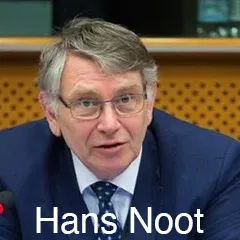
By Hans Noot, HRWF — Across Europe, the relationship between the state and religion is changing. Studies show that government restrictions on religion have reached their highest levels in the last 20 years.
Europe’s shift toward controlling religion
New reports point to growing legal and social pressure on religious minorities. Instead of the older model that gave people wide freedom to live out their beliefs, we now see a kind of “managerial” secularism. The state says it is neutral, but it increasingly decides when, where, and how religion may appear in public. This often hits minority faiths the hardest and puts freedom of religion or belief (FoRB) at real risk.
In several EU countries, restrictions go far beyond specific, clear problems. France’s long‑standing bans on religious symbols in public schools and on full‑face veils in public spaces have inspired wider limits on visible religion in education and public service. Similar patterns appear elsewhere.
Some rules limit religious dress at work. Other rules make it harder to build or even show religious buildings. Religious associations often face more complex registration and funding rules. In some places, protests, public prayers, or processions are allowed only at certain times and in certain zones. These events are not banned because they threaten public order, but because they are seen as unfitting for a “neutral” public space. Each measure is presented as neutral, yet together they give governments much more control over religious life.
Fear, identity politics, and a redefined secularism
This trend is driven by political fear and cultural anxiety. Terrorist attacks, heated debates about migration, and media controversies about Islam push governments to “do something.” Visible or unfamiliar religion is then cast as a possible threat to security, social peace, or “national values.”
Under this pressure, secularism is redefined. It becomes a tool to push religion out of common spaces instead of a system that protects equal freedom of conscience for everyone. Old majority traditions are often rebranded as “culture” or “heritage” and quietly protected. Minority practices stay labeled as “religion” and become targets for control. This creates a form of cultural dominance that clashes with Europe’s own human rights standards.
Recent steps in Quebec, Canada, show where this logic can lead. The province has moved to ban street prayers and prayer rooms in universities and other public institutions. This pushes an already strict version of secularism into key everyday spaces. It claims to manage specific risks like obstruction or incitement. In reality, it sharply limits peaceful, voluntary religious practice. Quebec is not in Europe, but it mirrors the same logic. It also offers a warning: if current European trends continue, policies could move from targeted rules to a broader suspicion of all visible religion.
Why freedom of religion still matters for democracy
There are, however, strong reasons for governments to protect FoRB, even in secular societies. First, FoRB supports social stability. When people feel their beliefs are respected and they have legal ways to practice their faith, they are less likely to withdraw into closed communities. They are also less likely to be drawn to extremist groups that exploit feelings of injustice. Societies that defend FoRB give people a peaceful outlet for deep convictions and disagreements. This reduces the risk that anger will turn into open conflict.
Second, FoRB is closely linked to other basic rights, such as freedom of expression, association, and assembly. Once a state starts to limit peaceful religious speech or gatherings in the name of “social cohesion,” it becomes easier to curb other unpopular views as well. A narrow, managerial version of secularism therefore weakens the wider network of civil liberties. Democracies depend on that network to remain healthy.
Third, in diverse societies, FoRB is vital for long‑term integration. It lets minorities join fully in public life without betraying their conscience. A rights‑based secularism that protects both belief and non‑belief is a better partner for integration than a secularism that sees religion mainly as a problem. Governments that keep FoRB strong are not soft on extremism. They are building trust, loyalty, and full citizenship among all their people.
The task for European policymakers is not to ignore real security risks or discrimination. It is to address them without normalizing a harsh, over‑managed secularism that criminalizes or sidelines ordinary religious practice.
This calls for strict use of proportionality, fair treatment of believers and non‑believers alike, and a clear line between real threats and simple public religiophobia – discomfort with visible religion.
It also requires a fresh view of secularism itself. Secularism should be an impartial framework that makes space for different convictions, not an ideology that tries to strip public life of religion. FoRB is part of the European values politicians so often talk about. If Europe is serious about human rights, it cannot treat FoRB as optional. FoRB is a key safeguard that protects democracy from the very fear‑driven politics that now endanger it. It is part of the European values politicians so often talk about.
Source: HRWF


