


In the aftermath of the Orbán era, Hungary faces the long and difficult task of repairing the profound damage inflicted on its religious landscape. Over a period of 15 years, hundreds of minority religious communities were stripped of their legal status, de-registered, and pushed to the margins through a system that placed political discretion above basic human rights and fundamental freedoms. This pattern — where the government delegitimises minority faiths, centralises State control over religious recognition, and rewards only politically aligned groups— has been observed in several non‑democratic countries. The FOREF article notes that Hungary’s 2011 church law triggered “one of the most dramatic state interventions into religious life seen in Europe in modern times,” with more than 300 communities losing recognition almost overnight. The consequences were not abstract but very practical instead involving schools, shelters, Roma outreach programmes, and entire spiritual communities being destabilised or forced toward closure.
Such policies have too often been applauded by certain Western anti‑cult organisations, whose rhetoric and funding streams have at times aligned with actors in non‑democratic countries that promote restrictive approaches to religious life. As FOB we have always advocated freedom of religion and belief for everyone across the European continent and we will welcome any progress in Hungary following the collapse of the more conservative part of the Hungarian society, so much praised by the Western anti-religion organisations, trusting the new cabinet re-aligns Hungary with the basic rights and liberties enshined in the Universal Declaration of Human Rights, the European Convention of Human Rights and other international human rights instruments.
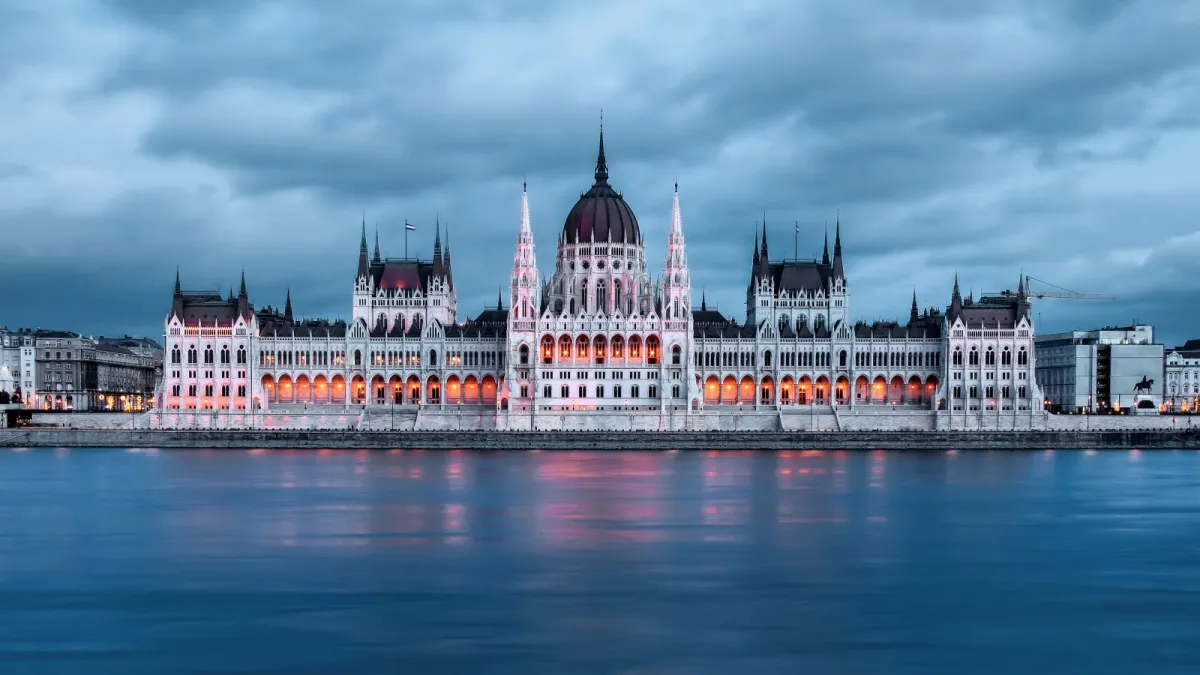
Hungarian Parliament Building (credits)
Hungary needs to ensure religious liberty
Viktor Orbán’s Government stripped more than 300 religious communities of their rights
by Dr. Aaron Rhodes and Peter Zoehrer, FOREF (29.04.2026) — When observers catalogue Hungary’s democratic backsliding under Viktor Orbán, a familiar list appears: captured media, weakened courts, politicised institutions, corruption and cronyism, and squeezed civil society. Those threats are real and extensively documented.
Yet one of the most sweeping — and least discussed — assaults on fundamental freedoms occurred in the realm of conscience and faith. In 2011, armed with a two-thirds parliamentary supermajority, Orbán’s government rewrote Hungary’s constitutional order and passed Act CCVI of 2011 on the Right to Freedom of Conscience and Religion. Effective 1 January 2012, the new church law triggered one of the most dramatic state interventions into religious life seen in the Europe in modern times.
More than 300 religious communities — some estimates reach 350 or higher — lost their official recognition as churches almost overnight. Only a handful (initially 14, later expanded modestly by Parliament) retained full legal status.
This was not bureaucratic housekeeping. It was a profound restructuring of the relationship between the state and belief itself — a faith-purge that turned politicians into gatekeepers of spiritual legitimacy.
The 2011 Turning Point
Before the reform, Hungary operated a relatively open registration system based on independent courts applying objective criteria. The new law replaced that with a heavily politicised model: recognition as a “church” now required parliamentary approval by a two-thirds majority, along with strict thresholds on membership (at least 1,000 members) and history (20 years in Hungary or 100 years internationally).
Politicians, not neutral judges, became the arbiters of which faiths deserved full legal standing. The consequences were immediate and brutal. Hundreds of communities — evangelical and free churches, Pentecostal groups, Buddhist communities, the Hungarian Islamic Community, the Hare Krishna movement, smaller Jewish associations, new spiritual movements, and charity-focused Christian bodies — were stripped of their status.
Among the most prominent affected was the Hungarian Evangelical Fellowship (MET), a large Methodist network with around 20,000 members. Led by Pastor Gábor Iványi — a former anti-communist dissident who had baptised two of Orbán’s children and renewed his marriage vows — MET ran an extensive network of schools for Roma children, homeless shelters, and aid programmes for the poor and marginalised. Its vocal criticism of government policies on poverty and human rights made it a repeated target.
Other communities faced similar upheaval. The Hungarian Society for Krishna Consciousness (Hare Krishnas) saw its members protest outside Parliament, with one monk declaring they represented “a billion Hindus worldwide” forced to prove their legitimacy again to the Hungarian state. Buddhist groups, smaller Muslim organisations, and independent evangelical congregations suddenly found themselves in legal limbo.
The Human and Practical Cost
To outsiders, losing “church status” may sound like a mere administrative detail. In reality, it carried profound consequences:
– Financing: Deregistered churches were deprived of the tax benefits that recognized churches received. The law treated them like businesses, forcing many of them to close down or be financially liquidated.
– Education and charity: Schools, kindergartens, addiction recovery programmes, shelters for the homeless and elderly, and Roma outreach initiatives faced funding cuts, closure threats, or forced restructuring.
– Legal and administrative chaos: Communities scrambled to reorganise assets, contracts, employment, and property rights under inferior legal forms — often as simple civic associations — risking liquidation of their institutions.
– Stigma: The government’s message was unmistakable: these groups were suspect, marginal, or not fully legitimate.
Pastor Gábor Iványi captured the deeper betrayal when he criticised Orbán’s fusion of Christianity and nationalism:
“[It] has nothing to do with the Bible, with the essence of the Bible.”
Human stories illustrate the toll. For MET, the loss of status meant repeated battles to keep homeless shelters open and schools for disadvantaged Roma children running. Volunteers and staff watched years of dedicated service teeter on the edge of collapse, sustained only by private donations and international scrutiny. Iványi described how the government’s actions threatened the very people his church served — hundreds of homeless individuals who could end up back on the streets without the church’s support.
In one smaller Pentecostal community (the Assembly of God United Pentecostal Church), deregistration led to court-ordered liquidation proceedings, forcing the group to fight desperately to retain even basic property rights. Leaders spoke of the fear that their places of worship and community programmes would simply be seized by the state.
For the Hare Krishna community in Krishna Valley, the sudden downgrade disrupted their farm-based spiritual and educational activities. Members expressed bewilderment at having to petition Parliament for recognition they had long enjoyed under the previous, more neutral system — feeling publicly branded as somehow less worthy of Hungary’s religious landscape.
These were not isolated cases. Across the country, pastors saw decades of ministry unravel, volunteers lost the legal capacity to serve the vulnerable, families witnessed their deepest beliefs publicly downgraded, and minority believers found themselves pushed even further to the margins.
International Condemnation and Faux Responses
The move sparked swift international criticism. The authors of this article raised concerns about violations of religious freedom in Hungary at an Organization for Security and Cooperation in Europe (OSCE) conference on 30 September 2015. The Venice Commission, the OSCE, the U.S. State Department, and domestic human rights organisations warned that the law violated principles of equality, legal certainty, and freedom of religion.
In 2014, the European Court of Human Rights ruled in Magyar Keresztény Mennonita Egyház and Others v. Hungary (and in follow-up judgments) that the deregistration process and politicised re-registration breached Articles 9 and 11 of the European Convention on Human Rights — freedom of religion and association. The Court held that Hungary was in violation of its obligations under the European Convention with respect to the process of recognizing churches through parliamentary votes, and the deregistration procedure. Furthermore, the Court ruled that differential treatment of religions with respect to how they can collect funds was discriminatory. Hungary was ordered to pay damages and restore rights, yet full compliance remained elusive for many affected groups.
The Orban government responded to this decision with revised church laws drafted in 2015, 2017, and finally in 2018. The 2018 law created four tiers of legally acknowledged churches. However, the new version of the law preserved the most egregious qualities of the original law by insuring that the most important questions concerning “church-state” relations were decided on the basis of political discretion. The state grants legal status to formerly deregistered religious groups, but determines the rights and privileges enjoyed by religious groups on the basis of “discretionary” – or rather arbitrary – agreements. These discretionary agreements have become a vehicle for rampant corruption, on the one hand, and a tool for undercutting the financial resilience of religious groups the government dislikes. The most prominent example of this weaponization of the decisions concerning the legal status of religious communities, has been the Orban governments relentless campaign to destroy the church led by Pastor Gabor Ivanyi.
The Need for Serious Reform
Over many years, much of the international media devoted extensive coverage to threats against press freedom in Hungary while largely ignoring the government’s blatant violation of religious freedom. This selective outrage is particularly troubling because freedom of religion and freedom of expression are deeply interconnected: When governments are allowed to politically rank and suppress religious communities with impunity, the space for independent journalism and open debate inevitably shrinks as well. No government violating religious freedom can be called “democratic,” and indeed, the Orban government promoted “illiberal democracy.”
In fact, after 15 years, Orban’s church law has to a large extent achieved its objectives, having eliminated numerous churches from the society, while the rights of some, including that of Gabor Ivanyi, continue to be violated.
As Hungary enters a post-Orbán era following the 2026 elections, with the Tisza party now holding a two-thirds majority, attention will rightly focus on restoring media freedom, judicial independence, anti-corruption measures, and fair elections. But any credible democratic renewal must also address the need to ensure religious freedom. The incoming government has said it will revisit the church law, but its focus seems to be on addressing the corrupt system of church financing, not restoring fundamental rights. It speaks of placing church financing on a “transparent, objective basis” — a welcome step. However, it remains vague on how the status of religious communities will be determined and whether the discriminatory tiered system created by Orbán will be dismantled. Prof. H. David Baer, one of FOREF Europe’s scientific advisors, warns that real reform requires more than technical changes to financing. The new government should seek a broad consensus that includes not only the “historical” churches which benefited from Orbán’s law, but also the deregistered communities. It should explicitly eliminate the tiered ranking of religious groups, ensure that church-state relations are not only transparent but fundamentally fair and equal, and address the past wrongs — including the lack of full legal remedy for the many groups whose rights were violated during the 2011 implementation.
The Tisza platform recognizes that the relationship between the state and religious communities was politicized under the Orban regime, and promises to place those relationships on a nonpoliticized, even footing that ensures religious freedom and respects the separation between church and state. This is an encouraging first step. But to achieve those goals the new Tisza government will need to completely replace Hungary’s current law on the status of religious communities. The four-tiered classification system in the law serves no purpose other than to legitimate the arbitrary and unequal treatment of different religious groups.
At the very least, a new law on the legal status of religious communities should:
- Eliminate all provisions that allow for “discretionary” agreements between religious groups determined in a politicized and arbitrary manner.
- Remove parliament from decisions concerning the legal status of individual religious groups. The role of parliament is to draft and approve a legal framework for recognizing religious groups, not to make individual, politicized judgments about the status of specific groups.
- Eliminate the tiered system of classification. the laws must treat the faiths of all peoples equally and impartially, including as regards financial benefits, tax exemptions, etc.
- Provide transparent remedies, including restored legal status and fair compensation for documented harms caused by the current law.
- Consult broadly with all religious groups, not just Hungary’s “historical churches” when drafting the new law on religion.
In view of the European Court decision on Hungary, the laws must treat the faiths of all peoples equally and impartially, including as regards financial benefits, tax exemptions, etc.
Behind every deregistered organisation stood real people: pastors watching decades of ministry unravel, volunteers losing the capacity to feed the hungry or shelter the homeless, families seeing their deepest beliefs publicly downgraded, and minority believers pushed even further to the margins.
A democracy is measured not by how it treats its majorities or allies, but by how it treats its minorities, its dissidents, and its unfamiliar believers.
Hungary’s future will not be fully democratic until the communities stripped of their rights in 2011 receive what was taken from them: equal dignity, equal legal standing, and equal recognition under the law.
Source: FOREF Europa


