



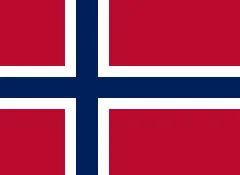
On 29 April 2026, the Norwegian Supreme Court quashed the ruling that had revoked the Jehovah’s Witnesses’ registration and their consequent access to state funding.
The Court also emphasised that the threshold for denying access to state funding and registration is high, and that Article 6 of the Norwegian Act on Religious Communities must be interpreted in the light of the autonomy of religious communities enshrined in Article 9 of the ECHR, read in conjunction with Article 11.
The case began years ago with the state’s withdrawal of state subsidies and revocation of registration. On 14 March 2025, the Borgarting Court of Appeal had unanimously declared null and void the cancellation of registration and the denial of state subsidies for the years 2021–2024, but that judgment was appealed. Now the Supreme Court has put an end to this latest instance of state interference in religious matters and freedom of belief.
Decisions to deny Jehovah’s Witnesses state funding and registration were invalid
Supreme Court judgment of 29 April 2026, HR‑2026‑1009‑A (case no. 25‑089326SIV‑HRET), civil case, appeal against the judgment of Borgarting Court of Appeal of 14 March 2025.
The State, represented by the Ministry of Children and Families (the Office of the Attorney General, represented by advocate Liv Inger Gjone Gabrielsen), v. Jehovah’s Witnesses (advocate Anders Christian Stray Ryssdal), The European Association of Jehovah’s Witnesses (intervener).
The case concerns the validity of five decisions refusing state funding and one decision deregistering Jehovah’s Witnesses as a religious community, as well as a refusal of re‑registration. The State argued that the religious community’s practice of social shunning violates children’s rights and members’ right to freely withdraw from membership, see section 6 of the Religious Communities Act and Article 9 of the European Convention on Human Rights (ECHR).
The Supreme Court outlined Jehovah’s Witnesses’ organisation and doctrine, including the practice of disfellowshipping (exclusion) and social shunning of former members, as well as the legal framework under the Religious Communities Act and the protection of freedom of religion under the ECHR. The Court emphasised that the threshold for refusing state funding and registration is high, and that section 6 must be interpreted in the light of the autonomy of religious communities under Article 9 of the ECHR, read in conjunction with Article 11.
As regards children’s rights, the Supreme Court unanimously found that the State had not provided sufficient evidence that, in practice, Jehovah’s Witnesses subject minor members to psychological violence or negative social control of such severity as to constitute a violation of children’s statutory rights. The Court attached weight to the internal guidelines governing the treatment of minors, the fact that family ties are not severed, and the absence of evidence demonstrating any actual scope of exclusions of children.
The Supreme Court further considered whether the practice of social shunning of former members violates members’ right to freely withdraw from the religious community. The Court held that Jehovah’s Witnesses satisfy the requirement of free and unconditional withdrawal under section 2 of the Religious Communities Act. A majority of three justices found that the shunning practice does not constitute undue pressure on members in breach of Article 9 of the ECHR. Particular weight was attached to the fact that the practice is rooted in the community’s doctrine, is known to members upon joining, and entails no direct pressure, coercion, or threats.
The shunning practice does not apply to family members within the same household, and family ties are not severed for family members outside the household. On this basis, the majority found that the conditions for refusing state funding and registration under section 6 of the Religious Communities Act were not met. The decisions refusing funding and ordering deregistration could therefore not be upheld.
Two justices dissented on the question of whether Jehovah’s Witnesses subject their members to undue pressure against withdrawing from membership, thereby violating members’ right to free withdrawal. The minority attached particular weight to the fact that shunning may lead to loss of contact with family members, especially for minors. It was also emphasised that shunning is the result of a rules‑based obligation and is intended to be a tangible consequence for those who leave. The minority therefore considered that the conditions for refusing state funding and registration under section 6 of the Religious Communities Act were met. The minority further concluded that the decision to refuse registration constituted an interference with freedom of religion under Article 9(1) of the ECHR, but that the interference was justified. The minority held that the decisions were not contrary to the prohibition of discrimination under Article 14 of the ECHR or to the protection of property under Article 1 of Protocol No. 1 to the ECHR.
The judgment clarifies the threshold for refusing state funding and registration of religious communities and how the relevant provisions are to be assessed in the light of the freedom of religion under the ECHR.
Source: Supreme Court of Norway


