






The 228 Incident and the persecution of Tai Ji Men highlight Taiwan’s difficult path toward fully implementing human rights.
By Alessandro Amicarelli — Two dates–February 28, 1947, and December 19, 1996–50 years apart prompt us to reflect on democratic progress in Taiwan.
February 28, 1947, has become part of the country’s collective memory. That day marked the escalation of tensions between the new rulers from mainland China and the local population. State Monopoly Bureau agents beat a woman selling cigarettes, a man was shot and killed, and what began as a protest turned into a nationwide uprising that led to a massacre. Soldiers intervened, people disappeared, and countless locals lost their lives. For decades, this topic remained taboo, discussed only in hushed tones at home.
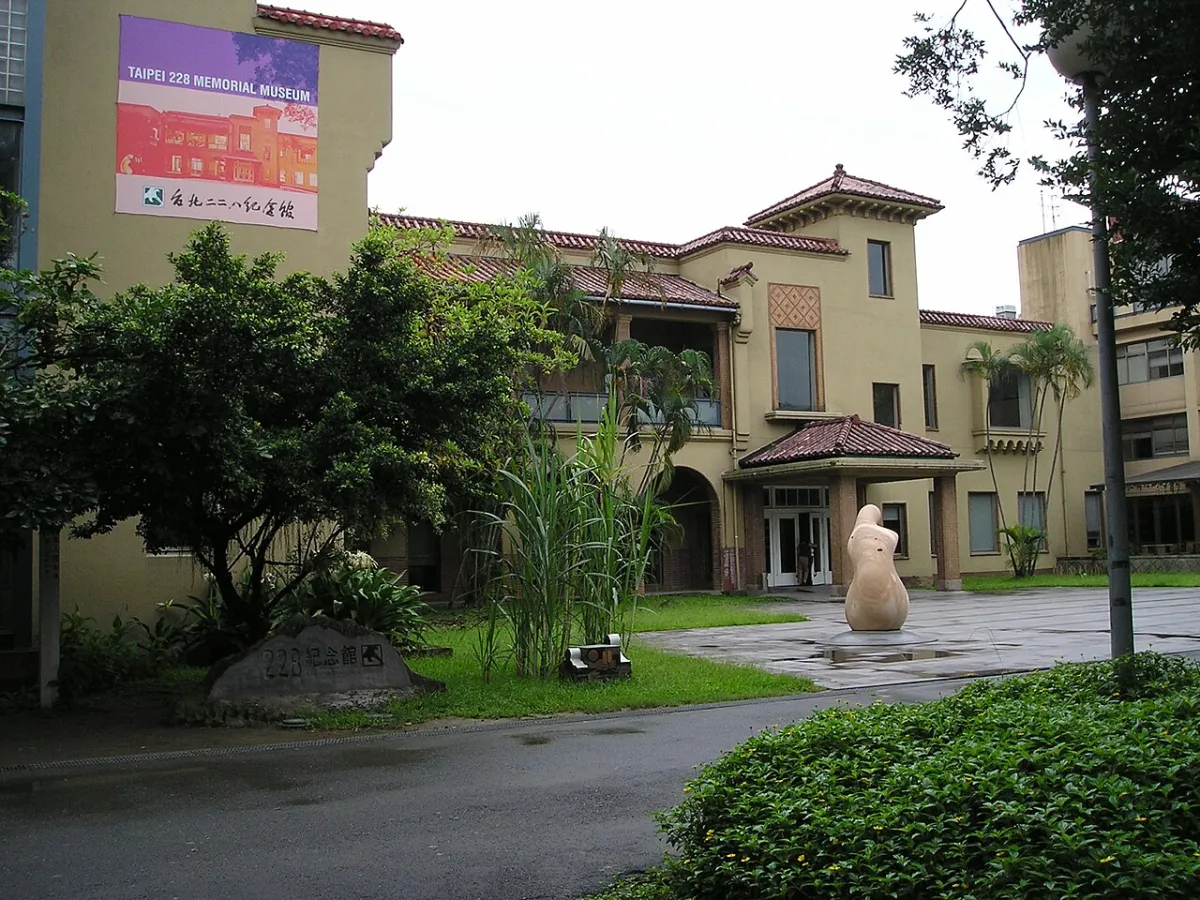
Today's 228 Memorial Museum in Taipei is housed in a broadcast station that played a role in the incident (credits).
The second date, December 19, 1996, is less known globally and even among some Taiwanese people, but familiar to those who follow Taiwan’s religious freedom issues. This date marks the start of the Tai Ji Men case. Unlike in 1947, there were no tanks or soldiers on the streets, and no bodies in rivers. Instead, a spiritual master, Dr. Hong Tao-Tze, along with his wife and surrounded by his disciples, was detained and presented as a criminal in the national news. This occurred because of strange accusations from a rather imaginative public prosecutor, who added claims of “raising goblins” to accusations of financial crimes.
A decade later, the Supreme Court of Taiwan stated clearly that there was no fraud or tax evasion, that the disciples’ offerings were gifts, not taxable tuition as claimed by the prosecutor, and even awarded compensation for wrongful detention.
What makes these two stories similar? It is the deep continuity in how power can act, even in very different times.
The wounds from the February 28 Incident have, to some degree, been addressed by bringing the issue into the open. A Peace Memorial Day has been established, and presidents visit memorials to offer public apologies to survivors and the families of those who never returned. Although this approach is still imperfect, the Memorial Day, the reports written about the incident, and some compensation represent attempts to acknowledge past wrongs and prevent them from happening again.
The Tai Ji Men case belongs to another era and another chapter in Taiwan’s history. Surprisingly, this case began just as Taiwan officially marked its transition, becoming a nation governed by democratic values and the rule of law.
So why target Tai Ji Men? Tai Ji Men is a menpai, a school of qigong, martial arts, and self-cultivation rooted in traditional culture. Its disciples refer to themselves as an energy family; they learn from their Shifu (Grand Master), practice, perform, and travel to promote peace and conscience. Their red envelopes for the master are a time-honored expression of gratitude, not a commercial exchange.
Despite improvements and a desire to do better, Taiwan in 1996 still retained the old habit of labeling some spiritual communities as dangerous or deviant. Because of that mentality, Tai Ji Men was seen as a problem to be “managed,” leading to criminal charges and years of litigation. People's lives were impacted: they faced discrimination at work, school, and in their neighborhoods; they lost jobs; some even lost their lives.
It was not until 2007, after a long ten-year struggle, that the Supreme Court finally delivered a ruling that should have resolved the matter: there was no crime. Tai Ji Men was innocent.
In most legal systems, this would have been the end of the matter. But here we see that past behaviors linger and the transition is still in progress.
Decades after the February 28 Incident, and despite the Supreme Court’s complete acquittal, some tax officials continued to hold onto their narrative. They issued and justified tax bills based on the very theory the courts had rejected. Over time, they slowly corrected all these bills to zero, except for the year 1992, using technicalities and deadlines to shield themselves. Eventually, they seized and nationalized land belonging to Tai Ji Men that was intended for a self-cultivation center to cover the disputed 1992 amount.
This is not February 28, and there are no mass graves, but the pattern feels familiar. In 1947, a public authority claiming to bring order silenced those who dared to complain through a massacre. In the Tai Ji Men case, a public authority that now honors the victims of the 1947 repression allows its bureaucrats to ignore a final Supreme Court decision, thereby punishing—without justification—a peaceful spiritual group, not with tanks and guns as in 1947, but with tax documents and nationalizations.
Despite the similarities between the February 28 and December 19 cases, a significant difference exists. The society of 1947 was very different from today. The victims of the 1947 repression and their families had no voice; they had to endure their pain silently and had no allies to support them.
Today’s society is entirely different. Learning from the past, Tai Ji Men has chosen to combat government oppression and violence by speaking out, taking to the streets, posting on social media, and joining international conferences and human rights forums. They engage with scholars, journalists, and NGOs. They travel the world asking public figures to ring their Bell of World Peace and Love, aware that what happened to them could happen to anyone, and that this is the time to expose state abuse.
The Tai Ji Men case raises a serious question: in today’s Taiwan, are the Constitution and the courts truly the foundation and protectors of society, or can bureaucrats with hidden agendas act as if they stand above both the Constitution and the courts?
A mature democracy cannot consist only of ceremonies for past victims. It must also have the courage to confront what is happening now, in its grey areas, where rights are eroded, reputations destroyed, and property taken and nationalized despite judicial decisions.
We honor February 28 to affirm that such things should never occur again. Finally resolving the Tai Ji Men case would be a tangible way to show that Taiwan has truly learned from the 1947 incident and is committed to lasting democracy and the rule of law.


