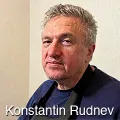





The Rudnev Case: New Evidence of Prosecutorial Falsifications

By Alessandro Amicarelli — The Rudnev case continues to evolve in ways that would be difficult to believe were they not so thoroughly documented. What has now emerged is not an isolated irregularity, nor a momentary lapse in prosecutorial diligence, but one more instance in a long‑established pattern: the construction of allegations based on assumptions that are not only unverified, but demonstrably false. This latest episode—concerning supposed failures by several defendants to comply with routine registration obligations—fits seamlessly into that troubling continuum.

Konstantin Rudnev and the Idea of a World Without Prisons

By Alessandro Amicarelli — Konstantin Rudnev has spent more than a decade behind bars. Eleven of those years were served in Russia after a trial that international observers regarded as deeply compromised. He is now detained in Argentina under accusations that mirror those used against him in Russia, a continuity that raises serious concerns about the transnational circulation of unverified allegations. His long experience of incarceration has led him to develop a reflection on the nature of prisons and the future of criminal justice. He recently published a short video that deserves attention, both for its tone and for the ideas it advances.

When a Court of Cassation Ignores International Standards: A Reflection on the Rudnev Decision

By Alessandro Amicarelli — The June 4 decision of the Court of Cassation of Argentina in the case of Konstantin Rudnev invites a careful examination through the lens of international law. The principles governing preliminary detention are among the most developed in global human rights jurisprudence. They exist to prevent a procedural measure from becoming a form of punishment. They require strict necessity, individualized assessment, and a constant evaluation of proportionality.

Before June 3: Why the Rudnev Case Needs a Reset

By Alessandro Amicarelli — On June 3, Argentina’s Court of Cassation will consider a request by the prosecutors to send again Konstantin Rudnev, who is currently under house arrest, to jail. This request arrives after a year marked by procedural irregularities, medical emergencies, and investigative choices that have placed the heaviest burden on the person least connected to the events that triggered the case. Having followed this matter closely, I believe the Court now has the opportunity to correct a trajectory that has caused profound harm and has produced no corresponding benefit for justice.

The Rudnev Case: New Evidence of Prosecutorial Falsifications

By Alessandro Amicarelli — The Rudnev case continues to evolve in ways that would be difficult to believe were they not so thoroughly documented. What has now emerged is not an isolated irregularity, nor a momentary lapse in prosecutorial diligence, but one more instance in a long‑established pattern: the construction of allegations based on assumptions that are not only unverified, but demonstrably false. This latest episode—concerning supposed failures by several defendants to comply with routine registration obligations—fits seamlessly into that troubling continuum.

Konstantin Rudnev and the Idea of a World Without Prisons

By Alessandro Amicarelli — Konstantin Rudnev has spent more than a decade behind bars. Eleven of those years were served in Russia after a trial that international observers regarded as deeply compromised. He is now detained in Argentina under accusations that mirror those used against him in Russia, a continuity that raises serious concerns about the transnational circulation of unverified allegations. His long experience of incarceration has led him to develop a reflection on the nature of prisons and the future of criminal justice. He recently published a short video that deserves attention, both for its tone and for the ideas it advances.