



Scientology: Berlin Finally Blinks

by Massimo Introvigne — Germany is known for its reliability. Sometimes this is impressive—like with its precise engineering, on-time trains, and organized archives. Other times, it leads to oddities, such as the fact that for almost thirty years, the country’s domestic intelligence service monitored Scientology, long after the political fears of the 1990s had faded. The Bundesamt für Verfassungsschutz (Office for the Protection of the Constitution) has now discreetly ended this monitoring, much like someone quietly shutting a door they wish they had never opened.

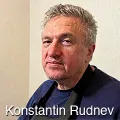
The Case of Konstantin Rudnev in Argentina: An Open Letter (May 25, 2026)

Biased prosecutors who try to jail again a man under house arrest and in serious health conditions should be removed.

We, the undersigned organizations dedicated to the defense of freedom of religion or belief and the protection of fundamental human rights, express our deep concern regarding the situation of Konstantin Rudnev, a Russian spiritual teacher currently under house arrest in Argentina.

The Rudnev Case in Argentina: Why the Recusal of the Prosecutors Has Become a Legal Imperative

By Alessandro Amicarelli — When I first wrote about the case of Konstantin Rudnev in Argentina, I described it as an extraordinary example of prosecutorial overreach, a proceeding driven more by imagination than by evidence. At that time, I emphasized the misuse of pretrial detention, the construction of a trafficking narrative connected to a “cult” but unsupported by facts, and the institutional mistreatment inflicted on a young woman, E., whose vulnerability was transformed into the cornerstone of an accusation that collapsed the moment one examined the record.

A Victory, and the Beginning of a New Stage: Konstantin Rudnev Under House Arrest

By Marco Respinti — For fourteen months, the life of Konstantin Rudnev unfolded behind the walls of Rawson, Argentina’s most remote maximum‑security prison. Fourteen months without a conviction. Fourteen months without a trial. Fourteen months during which the Constitution seemed to apply to everyone except him. His case, as The European Times has documented, became a troubling example of how prosecutorial narratives can override judicial orders, medical evidence, and basic human rights.

The Rudnev Case in Argentina: The True Story

By Alessandro Amicarelli — For years, I have defended individuals and communities targeted by states that see danger where none exists. Still, the case of Konstantin Rudnev in Argentina stands out—even after all I have seen—as an extraordinary instance of prosecutorial imagination. Rudnev remains in jail today despite three separate judicial orders, each converting his detention into house arrest. Three times judges have ruled he shouldn’t be in prison; three times the orders were ignored.

China’s long arm against Falun Gong now reaches Italy too

We are pleased to receive and publish the report sent to us by the Italian Falun Dafa Association on the Chinese Communist Party’s (CCP) transnational repression against Falun Gong. FOB has on several occasions addressed the dire situation faced by Falun Gong practitioners (and others) in China, who are victims of abuse, arbitrary detention, killings and forced organ harvesting. The issue had also come to the attention of the European Parliament, which, in a resolution dated 18 January 2024, took a stand against the persecution of Falun Gong in China.

Europe’s new “managerial secularism” is putting freedom of religion or belief at risk

By Hans Noot, HRWF — Across Europe, the relationship between the state and religion is changing. Studies show that government restrictions on religion have reached their highest levels in the last 20 years. New reports point to growing legal and social pressure on religious minorities. Instead of the older model that gave people wide freedom to live out their beliefs, we now see a kind of “managerial” secularism.

The Need for a Religious Freedom Reform in the post Orbán Hungary

In the aftermath of the Orbán era, Hungary faces the long and difficult task of repairing the profound damage inflicted on its religious landscape. Over a period of 15 years, hundreds of minority religious communities were stripped of their legal status, de-registered, and pushed to the margins through a system that placed political discretion above basic human rights and fundamental freedoms. This pattern — where the government delegitimises minority faiths, centralises State control over religious recognition, and rewards only politically aligned groups— has been observed in several non‑democratic countries.

Police Raid on AROPL in Crewe Raises Concerns Over Proportionality

by Alessandro Amicarelli — The April 29 operation in Crewe, where some 500 British police officers—reportedly joined by Irish and Swedish personnel—stormed the headquarters of the Ahmadi Religion of Peace and Light (AROPL), has generated serious questions about proportionality and the use of force. AROPL has filed a complaint with the United Nations for the mistreatments its members received in Sweden, and some see this action as the result of inputs to the UK from the Swedish police.

The Norwegian Supreme Court rehabilitates Jehovah’s Witnesses and freedom of belief

On 29 April 2026, the Norwegian Supreme Court quashed the ruling that had revoked the Jehovah’s Witnesses’ registration and their consequent access to state funding.

The Court also emphasised that the threshold for denying access to state funding and registration is high, and that Article 6 of the Norwegian Act on Religious Communities must be interpreted in the light of the autonomy of religious communities enshrined in Article 9 of the ECHR, read in conjunction with Article 11.

“Law and Tax 228”: The Truth Behind the Fabricated Case Against Tai Ji Men

by Alessandro Amicarelli — Before Taiwan’s 228 Peace Memorial Day, Taiwan’s Democratic Progressive Party (DPP), which is currently in power, posted on social media that the scars of history live not only in the hearts of the victims’ families but also in the public sphere. Remembering the truth, clarifying responsibility, and remaining vigilant to avoid repeating past mistakes are duties shared by all Taiwanese—regardless of political party, ethnicity, or generation, the DPP wrote.

FRANCE: When ‘anti-cult deviances’ clash with human rights

By Willy Fautré, director of Human Rights Without Frontiers — At the beginning of April, various parties publicly expressed, with complete impunity, their strong opposition to the freedom of worship and assembly of Jehovah’s Witnesses wishing to publicly commemorate their annual “Memorial of Jesus’ death” in various towns across France, which corresponds to the Catholic celebration of Easter.

OSCE Assessment of France: Secularism, Security, and the Question of Minorities

The OSCE's 2026 report on France praises efforts against antisemitism but criticizes MIVILUDES for lacking transparency. Delegates note that strict secularism often discriminates against minority groups like Scientologists and Jehovah's Witnesses. Recent judicial rulings against the state body highlight the tension between state vigilance and international human rights standards regarding freedom of religion and due process.

Commission designates Special Envoy for Freedom of Religion or Belief outside the EU

The European Commission has decided to designate Mairead McGuinness as Special Envoy for freedom of religion or belief outside the EU. In this capacity, she will report to Commissioner Brunner, who is in charge of leading the Commission's dialogue with churches and religious associations or communities, and with philosophical and non-confessional organisations, and will provide support for intercultural and interreligious dialogue processes outside the European Union, including with national authorities, organisations and representatives of different faiths.

FOB welcomes three new members of its Scientific Committee

FOB is glad to announce that three new scholars are joining its Scientific Committee: Brandon Taylorian, Mark Nemes and Karolina Maria Kotkowska. With their experience in law and religion, contemporary forms of belief and practice, and the study of esotericism and new religious movements, they will help FOB to follow more closely the situation of belief communities and the challenges they face in today’s rapidly changing environment.

Tai Ji Men in Taiwan: An Unresolved Human Rights Concern

By Alessandro Amicarelli — If we want to understand the Tai Ji Men case, we inevitably return to one day: December 19, 1996. You will not find it in schoolbooks, and it has not (yet) become a national holiday, but for those who monitor freedom of religion or belief in Taiwan, it marks a clear turning point. On that day, prosecutors and police raided Tai Ji Men. Dr. Hong Tao-Tze, his wife, and several dizi (disciples) were detained. Their detention was not a quiet procedural act: that evening, images of Dr. Hong, his wife, and the disciples were broadcast across national TV, framed and commented on as if they were criminals.

CESNUR 2025 in Cape Town: a necessary conversation on freedom of religion or belief

by Alessandro Amicarelli — CESNUR 2025 took place in Cape Town last November 2025. Now several months later, we can see its importance more clearly. FOB – Freedom of Belief played a full part. President Alessandro Amicarelli attended with Rosita Šorytė from Lithuania and Susan Palmer from Canada, both members of the Scientific Committee of FOB. Their voices stood out in human rights discussions. They cited actual cases and field accounts. Discrimination hits religious minorities every day. Press attacks, "anti-cult" language, blurry laws still strike at groups others dislike.

Egregious Religious Freedom Abuses From Key Nations Exposed by USCIRF 2026 Annual Report

Washington, DC – The United States Commission on International Religious Freedom (USCIRF) today released its 2026 Annual Report. The report documents religious freedom conditions throughout 2025 and sets forth U.S. policy recommendations to the President, the Secretary of State, and U.S. Congress to advance freedom of religion or belief (FoRB) abroad.