



A Dangerous Line Crossed in Seoul: The Arrest of Chairman Lee

Lee Man-hee, the leader of the Shincheonji Church of Jesus, widely known as Chairman Lee, has been arrested today on accusations that many consider deeply disproportionate to the case at hand. Whatever the final legal outcome, the image itself is deeply concerning: an elderly faith leader facing detention on the basis of charges that appear, to many observers, laughable in a country long regarded as a democracy. As Massimo Introvigne’s analysis suggests, this moment should prompt reflection on how, at a time when religious freedom is already under sustained pressure, the case risks crossing a line that should never have been approached in the first place in a democratic society.art

Argentina: The Troubling Pattern of Fernando Arrigo

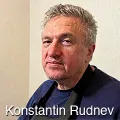
By Alessandro Amicarelli — I first took an interest in Prosecutor Fernando Arrigo and his team because of their prosecution verging on obsession of the Russian dissident and spiritual teacher Konstantin Rudnev, whom they accuse of being a “cult” leader. As I continued examining the case, I discovered that Arrigo displays a similar fixation in the proceedings against the Mapuche leader Facundo Jones Huala. Argentine media report that a third case has raised comparable concerns about his conduct. This is the case of Franco Casco.

Latest from Japan: when faith becomes a target

Japan’s treatment of the Unification Church signals and reinforces a broader erosion of religious freedom across the region. The concern is not confined to Japan alone: in South Korea, the arrest today of Chairman Lee, the 95-year-old leader of the Shincheonji Church of Jesus, on what appear to be unreasonable and politically charged accusations raises serious questions about the direction in which Seoul is heading. Likewise, in Argentina, Konstantin Rudnev remains in detention on allegations that are not merely weak but, critics argue, entirely void, a development that sits uneasily with a country founded on the rule of law and makes it look, at least in this case, uncomfortably similar to more authoritarian systems in the region.

Argentina: A New Turning Point in the Rudnev Case

by Alessandro Amicarelli — A new hearing was held today in the long and troubled case of Konstantin Rudnev, the Russian spiritual teacher whose health has deteriorated to the point that several doctors have concluded that he cannot safely endure imprisonment. The hearing focused on the defense’s request to postpone the forensic medical examination scheduled for June 25, 2026. The outcome of this examination will determine whether Rudnev remains under house arrest or is returned to prison, a decision that carries potentially lifethreatening consequences for a man whose physical condition has been repeatedly described by specialists as fragile.

A Dangerous Line Crossed in Seoul: The Arrest of Chairman Lee

Lee Man-hee, the leader of the Shincheonji Church of Jesus, widely known as Chairman Lee, has been arrested today on accusations that many consider deeply disproportionate to the case at hand. Whatever the final legal outcome, the image itself is deeply concerning: an elderly faith leader facing detention on the basis of charges that appear, to many observers, laughable in a country long regarded as a democracy. As Massimo Introvigne’s analysis suggests, this moment should prompt reflection on how, at a time when religious freedom is already under sustained pressure, the case risks crossing a line that should never have been approached in the first place in a democratic society.art


Argentina: The Troubling Pattern of Fernando Arrigo

By Alessandro Amicarelli — I first took an interest in Prosecutor Fernando Arrigo and his team because of their prosecution verging on obsession of the Russian dissident and spiritual teacher Konstantin Rudnev, whom they accuse of being a “cult” leader. As I continued examining the case, I discovered that Arrigo displays a similar fixation in the proceedings against the Mapuche leader Facundo Jones Huala. Argentine media report that a third case has raised comparable concerns about his conduct. This is the case of Franco Casco.