





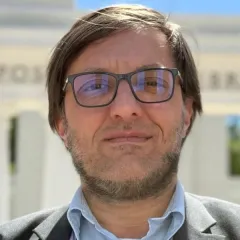
by Alessandro Amicarelli — For some time, I have followed the work of Argentine Prosecutor Fernando Arrigo, whose conduct in several high-profile cases has raised concerns among human rights observers. I first encountered his name while studying the prosecution of Russian spiritual teacher Konstantin Rudnev, a case marked by procedural anomalies, questionable evidentiary practices, and an unusual insistence on portraying a dissident as a dangerous leader of a supposed “cult,” prompting me to express serious reservations. Recently, Argentine publications have brought renewed attention to another matter in which Arrigo plays a central role: the Franco Casco case.
The Casco case is among the most painful criminal proceedings in recent Argentine history. In 2014, young Franco Casco disappeared after being detained at a police station in Rosario. His body was later found in the Paraná River. The tragedy sparked widespread public emotion, and the victim’s relatives have consistently maintained that police officers were responsible for his death. The accused officers, meanwhile, maintain their innocence. I do not take a position on the merits of the case, which the courts must decide. My concern lies elsewhere: how the investigation has been conducted and the consequences of that conduct for the families involved.
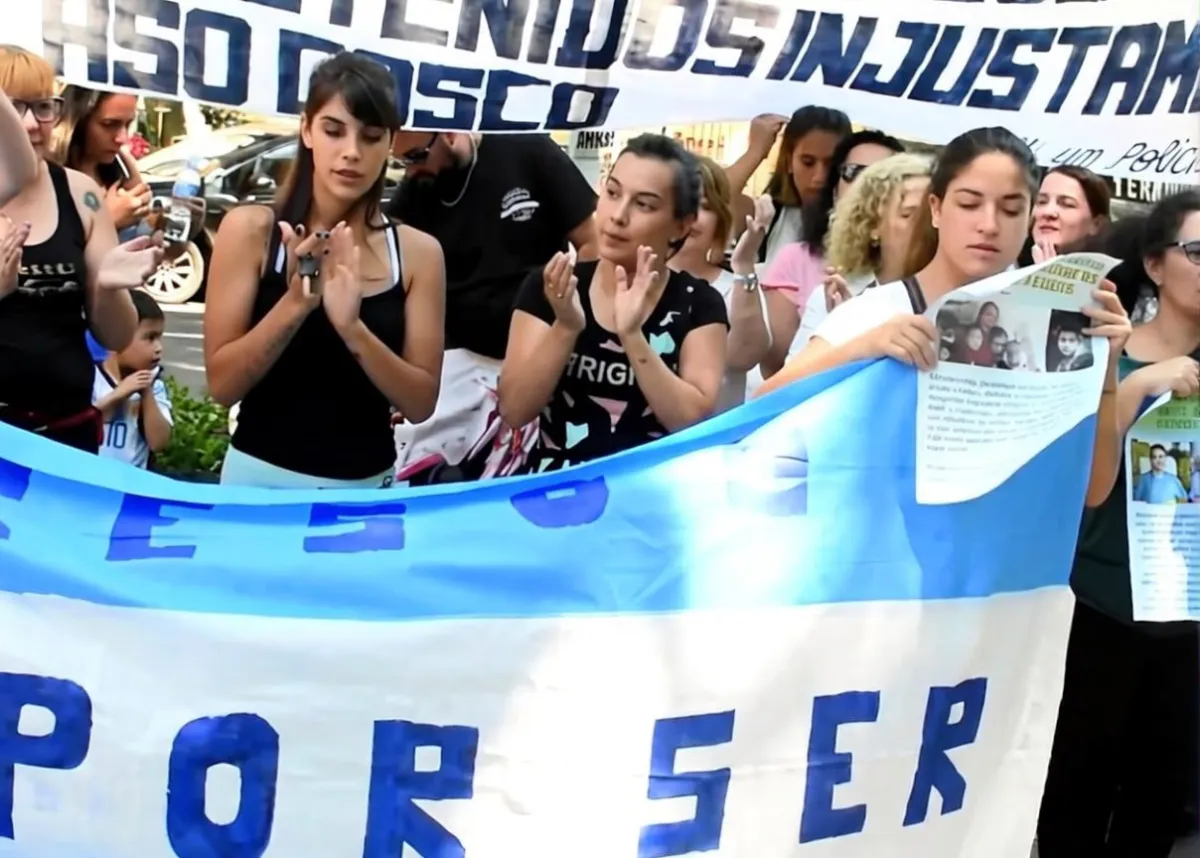
Relatives of the Casco case defendants protest against Prosecutor Arrigo.
Recent Argentine media reports detail the devastating human cost of preventive detention in this case. Several police officers have been held for years as the investigation continues. Their children have grown up without them, and their partners have endured long periods of uncertainty and anguish. One detained officer recounted that his child lost his hair from stress while he was imprisoned in Marcos Paz. Another described how his mother died before she could see him free again. These tragedies unfold quietly, far from the headlines, yet they are part of the reality of preventive detention when it is used for extended periods. Franco Casco’s family also deserves justice, but one wonders whether Arrigo’s methods are the way to obtain it.
The recent publications add a dimension that is impossible to ignore. They give voice to the children of the accused, who have lived their entire childhoods with a father behind bars. Sub-commissioner Enrique Gianola, who spent six years in preventive detention, said, “While I was imprisoned in Marcos Paz, my son’s hair fell out. The entire back of his head. They say it was because of the nerves. He could not bear that his father was no longer by his side.” These are words that convey more than any legal argument could.
Another child explained that he stopped celebrating his birthday because each year passed without his father at home. A young girl told reporters that she no longer remembers what it feels like to have her father pick her up from school. These are not rhetorical flourishes. They are the lived experiences of minors who have carried the emotional weight of a judicial process that has stretched on for years. Their words reveal the profound loneliness, fear, and confusion that prolonged preventive detention imposes on those who have no role in the case and no way to understand why their family has been torn apart.
One officer described how his son asked him during a prison visit, “Dad, when are you coming home?” The question is simple, yet it contains the entire tragedy of prolonged preventive detention. Children measure time differently. For them, a year without a parent is an eternity. Six years can reshape their entire emotional world. The Argentine media reported how some children developed anxiety disorders, how others withdrew socially, and how several began psychological treatment to cope with the absence of a father who had not been convicted of any crime. These accounts illustrate the human cost of a prosecutorial strategy that keeps individuals imprisoned while investigations stagnate. The families have protested for years. Prosecutor Arrigo has ignored them.
Argentine media have also gathered direct appeals from the children of the accused, who have tried to address Prosecutor Arrigo personally. Their words convey the emotional burden they have carried throughout these years. One child asked, “Mr. Arrigo, why did you lie to the court? Because of your lies my father was imprisoned, and I spent most of my life without him.” Another said, “Mr. Prosecutor, my father is innocent. Why do you want to imprison him again?” A third child declared, “Fernando Arrigo, my father was acquitted. Because of you he spent six years in prison while being innocent. Why do you now want to send him back behind bars?” A group of children added, “Please remove Fernando Arrigo from the Prosecutor’s Office. He kept our fathers illegally imprisoned for six years. Now they have been acquitted, but he wants to imprison them again, this time for life.” These appeals, ignored so far by Arrigo, reveal the depth of the suffering endured by minors who have grown up in the shadow of prolonged preventive detention and who now fear that the ordeal may begin anew.
According to estimates cited in Argentine discussions, about fifty thousand families have been affected by prolonged preventive detention in recent years. Fathers and husbands have spent years behind bars without a final judgment. Children have grown up in fractured households. Mothers have died without seeing their loved ones released. Six years of preventive detention can destroy any family. This practice inflicts suffering on defendants’ relatives, people who have not been accused of any crime and whose only misfortune is being related to someone caught in a slow and often opaque judicial process.
In the Casco case, the investigation has dragged on for years, and authorities have repeatedly extended preventive detention. Media reports describe procedural irregularities and evidentiary problems that have prompted criticism of Prosecutor Arrigo and his team. Concerns include reliance on incomplete or contradictory statements, the presentation of materials that do not withstand scrutiny, and an approach that appears to prioritize maintaining detention over completing the investigation on time. These criticisms echo those raised in other cases Arrigo handled.
The parallels with the Rudnev case are difficult to ignore. In that matter, an international academic study recently compiled reports that contradict the prosecution’s narrative. The defense has accused Arrigo of relying on flawed materials and resisting efforts to correct the record. Preventive detention has been prolonged, Rudnev’s dramatic health issues have been ignored, and the case has been marked by irregularities and delays that have raised questions about the prosecutor’s methods.
When similar concerns arise across multiple cases handled by the same prosecutor, it is legitimate to ask whether the problem stems from individual circumstances or from a broader prosecutorial attitude. Preventive detention is a powerful instrument. It should be used with restraint and only when strictly necessary. When it becomes routine, prolonged without clear justification, and accompanied by evidentiary practices that raise doubts, it becomes a source of injustice. It destroys families, undermines trust in institutions, and damages the credibility of the judicial system.
Argentina has a strong legal tradition and a vibrant civil society. It deserves a prosecutorial system that upholds the highest standards of professionalism and respect for human rights. The cases involving the Franco Casco defendants and Konstantin Rudnev suggest that something is amiss.
Repeated criticism of Prosecutor Fernando Arrigo, extended preventive detentions, delays, and questionable evidence gathering suggest a pattern that deserves serious scrutiny—a comment I make without implying any disrespect for the Argentine judiciary.
The suffering of families torn apart by years of preventive detention is real. The concerns raised by journalists, lawyers, and human rights defenders are real. The need for accountability is real. Argentina must confront these issues and ensure that prosecutors exercise their power fairly, transparently, and with respect for the dignity of all involved.
Published also on the The European Times


