





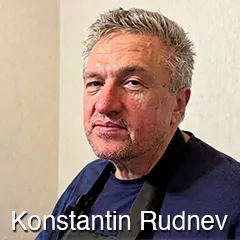
by Alessandro Amicarelli — The filing of a new written statement at the United Nations Human Rights Council by two ECOSOC-accredited NGOs, CAP‑LC (Coordination of Associations and Individuals for Freedom of Conscience) and CADD (Citizens in Action for Democracy and the Development), brings the Konstantin Rudnev case back into the international legal arena. For lawyers tracking the comparative evolution of procedural guarantees, the document matters because it highlights a structural tension within the Argentine criminal system. The NGOs warn that the Federal Chamber of Criminal Cassation has accepted and granted a prosecutorial complaint challenging the decision to replace pretrial detention with house arrest. They describe this development as an intervention that the Federal Code of Criminal Procedure (CPPF) does not envisage. Their concern is not limited to one defendant. It touches the very logic of the CPPF and how judicial review should operate.
The NGOs argue that the Cassation Court has opened “a procedural avenue… that the CPPF does not foresee.” This point deserves reflection. The CPPF was drafted to distribute functions among different judicial actors. The preliminary investigation stage, including decisions on coercive measures, was entrusted to judges with review powers. The purpose was to avoid repetitive litigation and to preserve the presumption of innocence. When cassation review extends to matters the code assigns elsewhere, the system’s balance shifts. The appeal filed by Rudnev’s lawyer, as quoted in the statement, describes how “a complaint without legal basis was declared admissible” and how the ruling “lacks adequate reasoning and fails to respect constitutional and conventional guarantees, including the right to an effective remedy.”
From a human‑rights perspective, the reference to the International Covenant on Civil and Political Rights is essential. Article 14.2 protects the right to a fair and impartial trial. Article 14.5 ensures that a higher tribunal can review a conviction and sentence. These provisions form part of a coherent framework. Argentina has signed and ratified the ICCPR. Courts are bound to apply it. Remedies must be genuine. Review must remain within procedural limits. When these limits are exceeded, the ICCPR’s protection weakens. The NGOs remind the Human Rights Council that due process is an international obligation.

Rudnev under house arrest
The statement also examines Prosecutor Fernando Arrigo’s role. It notes his conduct borders on a special obsession for this defendant and the group he allegedly leads. It adds that he indicates to judges “how the Criminal Code should be read and how its limits may be set aside.” With all due respect to the Argentinian judiciary, in my study of the Rudnev case and other cases (such as the one involving the police officers who are defendants in the Franco Casco murder trial), I have also found Prosecutor Arrigo’s attitude objectionable. It raises questions about the separation of functions within the criminal system. Prosecutors are essential actors. They represent the public interest. Their role, however, is not to instruct judges on how far the law may be stretched.
For those of us who work in international human‑rights litigation, the relevance of the new statement lies precisely here. The Rudnev case illustrates how procedural safeguards can be eroded not through dramatic violations but through small shifts in jurisdiction, admissibility, and review. These shifts accumulate. They create precedents. They shape practice. They affect defendants whose cases may never reach international attention. The Human Rights Council is now informed that such a dynamic may be unfolding in Argentina.
The statement also recalls that Rudnev is recovering from surgery and that medical prescriptions require “strict bed rest and continuous assistance.” It adds that “any measure that would send him back to prison would expose him to risks that authorities charged with protecting fundamental rights cannot overlook.” These sentences express a legal reality, not only a medical one. When a defendant’s health is compromised, coercive measures must be assessed with heightened attention. The principle of proportionality is a concrete safeguard that prevents detention when it becomes incompatible with medical evidence.
The NGOs conclude by inviting the authorities to ensure that the CPPF is applied according to its own terms and that its jurisdictional boundaries are respected. They ask that appeals not authorized by the code be avoided and that decisions fully account for Rudnev’s medical condition. They insist that the ICCPR provides the necessary framework to prevent further injustice. Their intervention is timely. It reminds the international community that protecting legality depends on the consistent application of procedural rules. It also reminds Argentina that its commitments under the Covenant require vigilance, especially when a defendant’s health is at stake.
Filing this statement is a call to reaffirm the integrity of the Argentine criminal system and ensure that judicial review remains within the limits set by law. For FOB, this is a matter of principle. Declarations do not preserve the rule of law. It is preserved by decisions that respect the architecture of procedure and by remedies that remain faithful to the guarantees enshrined in international conventions.


