





A new and troubling development in an already paradoxical case.
By Alessandro Amicarelli — The Rudnev case continues to evolve in ways that would be difficult to believe were they not so thoroughly documented. What has now emerged is not an isolated irregularity, nor a momentary lapse in prosecutorial diligence, but one more instance in a long‑established pattern: the construction of allegations based on assumptions that are not only unverified, but demonstrably false. This latest episode—concerning supposed failures by several defendants to comply with routine registration obligations—fits seamlessly into that troubling continuum.
According to a filing submitted by the Ministerio Público Fiscal on 8 June 2026, nearly all defendants in the case allegedly failed to appear at the police station or remain reachable at their registered addresses, as required every fifteen days. The prosecution urged the judge to “intimate” them to appear within forty‑eight hours, implying that non‑compliance had been widespread and deliberate. Yet the factual record tells a very different story. Independent verification has already confirmed that the defendants did comply. They appeared when instructed, signed the required forms, and provided their addresses. They possess the signatures, notifications, and confirmations that prove it. These documents are not hypothetical; they are in the case file. They contradict the prosecution’s assertions entirely.
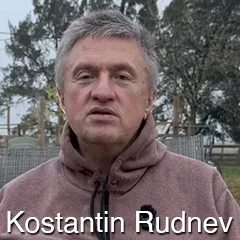
The claim becomes even more untenable when one considers Tamara, the wife of Konstantin Rudnev. She is permanently with her husband, who remains under continuous police surveillance. The prosecution’s own filing acknowledges that the police failed to visit her home as scheduled, yet still insinuates that she somehow failed to comply. The allegation is not merely incorrect; it is logically impossible. And yet it was advanced as if it were a fact.

Tamara Saburova with her husband Konstantin Rudnev
This raises a question that can no longer be avoided: why would prosecutors make assertions that collapse upon the slightest factual scrutiny? Why would they present claims contradicted by documents already in their possession? And why now, at a moment when their broader theory of the case is visibly disintegrating under the weight of its own contradictions?
To understand the significance of this new episode, it must be situated within the broader prosecutorial pattern that has defined the Rudnev proceedings from the outset. The reliance on unverified or plainly false allegations is not new; it is the method by which the case has been sustained. The same dynamic was evident in the appeal before the Cassation Court concerning Rudnev’s house arrest. There, prosecutors advanced a series of assertions—alleged drug trafficking, alleged contacts with the supposed victim, alleged flight risks—that were either unsupported by evidence or directly contradicted by the case file. The court was asked to accept these claims as fact despite the absence of proof and, in some instances, despite the existence of evidence disproving them.
What we are witnessing now is not a shift in prosecutorial behaviour, but its continuation. The new allegations about supposed failures to comply with registration requirements are simply the latest manifestation of a systematic practice: the construction of accusations first, and the search for evidence later—if at all. When the facts do not support the narrative, the narrative is adjusted, not the conclusions.
Such conduct is incompatible with the principles of due process and with the ethical obligations imposed on prosecutors under domestic and international law. Prosecutors are not permitted to mislead the court. They are not permitted to present allegations without factual basis. They are not permitted to create the appearance of non‑compliance where none exists. And they are certainly not permitted to use unverified claims as a tool to exert pressure on defendants who have complied with every obligation imposed upon them.
The deeper issue, therefore, is not the specific falsity of this or that allegation, but the systemic nature of the falsification itself. When prosecutors repeatedly advance claims contradicted by their own files, when they fail to verify facts before presenting them to a judge, and when their actions risk depriving individuals of liberty on the basis of falsehoods, the problem is structural. It concerns the integrity of the prosecutorial function and the credibility of the justice system.
What this new episode confirms with particular clarity is the deeper structural flaw that has accompanied the case from the very beginning: the prosecution’s factual assertions are accepted as true the moment they are pronounced, without any independent judicial verification. Throughout the entire period of communication with the Argentine authorities, every statement advanced by the prosecutors has collapsed under scrutiny, yet the courts have continued to treat their claims as inherently reliable. This dynamic is more than a procedural irregularity. It is the very mechanism through which miscarriages of justice take root. When judges fail to examine the factual basis of prosecutorial allegations, they effectively delegate their constitutional duty of impartial evaluation to the very party that seeks a conviction. This abdication of judicial responsibility transforms unverified assertions into operative truths, with consequences that directly affect human liberty.
The new allegations illustrate this problem in its purest form. The prosecution presented a narrative that was not only unsupported by the record but contradicted by documents already in the case file. Yet the danger lies not only in the falsity of the claim, but in the expectation—based on long‑standing practice—that the court would accept it without verification. This expectation is not unfounded. In Argentina’s current judicial climate, particularly at the level of the Cassation Court, prosecutorial submissions are routinely treated as authoritative, even when earlier instances have already dismantled the same assertions. The result is a system in which the prosecution’s word becomes a substitute for evidence, and where the burden of disproving falsehoods is placed entirely on the accused.
This pattern is not unique to the Rudnev proceedings. The case of the nineteen police officers in the “Caso Franco Casco” stands as a stark illustration of what happens when courts rely on unverified prosecutorial claims. There, the Cassation Court accepted as true a series of “facts” that had already been disproven, even adding witness statements that the supposed witnesses later denied ever giving. The acquittal was overturned, the case was reopened, and the defendants were placed at risk of life imprisonment—all because the judges failed to perform the most basic task entrusted to them: verifying the accuracy of the prosecution’s assertions. The parallels with the current situation are impossible to ignore. In both instances, the prosecution advanced claims that could not withstand scrutiny, and the courts accepted them without question.
The Rudnev case now stands at a similar crossroads. The prosecution continues to escalate its allegations—even invoking false notions of “international drug trafficking”—despite the absence of evidence and despite prior judicial findings that contradict these claims. The Cassation Court, for its part, appears prepared to accept these assertions on faith, just as it has done in other cases. This is a systemic failure that undermines the very foundations of the rule of law. When courts abandon their duty to verify facts, they cease to function as neutral arbiters and instead become instruments through which unverified accusations acquire the force of judicial truth.
What makes the present moment particularly critical is that the pattern has become repetitious. The prosecution systematically submits false or unsubstantiated claims, counting on the fact that no one will check them. The courts, in turn, accept these claims without the rigorous scrutiny that justice requires. This cycle of blind trust and institutional impunity is what allows falsifications to proliferate. Breaking this cycle requires more than exposing individual falsehood. It requires the courts to reclaim their role as independent verifiers of fact and to hold prosecutors accountable when they mislead the judiciary. Without such accountability, the system will continue to reward falsification and punish truth.
The public has a right to the truth. The court has a right to accurate information. And the defendants have a right to protection from arbitrary and unfounded accusations. The Rudnev case has already exposed profound weaknesses in the handling of evidence, the reliance on foreign misinformation, and the use of coercive measures unsupported by factual foundations. This latest development adds yet another layer of concern. It is legitimate to ask whether the prosecution is now searching for procedural pretexts to justify new arrests or to compensate for the collapse of its earlier accusations.
At this stage, it is no longer sufficient to examine only the conduct of the defendants. The conduct of those who accuse them must also be scrutinized. The rule of law demands nothing less.
When courts abandon their duty to scrutinize the assertions placed before them, they cease to function as guardians of legality and instead become conduits through which falsifications acquire the force of judicial truth. The Rudnev case now stands as a test of whether this cycle of blind trust and institutional impunity will continue unchecked. Only by restoring balance can Argentina begin to dismantle the entrenched system of prosecutorial falsification, reaffirm the principles of judicial independence, and ensure that no individual’s liberty is placed at the mercy of unexamined falsehoods.


