





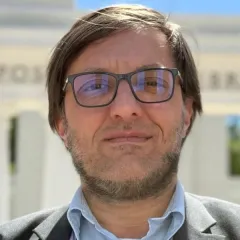
by Alessandro Amicarelli — For several months, I have examined Prosecutor Fernando Arrigo's conduct in the case involving Konstantin Rudnev (and in other cases as well). His decisions, his procedural strategies, and his interpretation of evidence have been the subject of repeated legal debate. I have written about these issues before, focusing on the prolonged preventive detention imposed on defendants, the pressure exerted on defense lawyers, and the unusual steps taken to expand a case that lacked a clear evidentiary foundation.
Arrigo’s role has always been central. His instructions shaped the investigation's trajectory, his filings set the pace of the proceedings, and his interpretation of events influenced how the case was perceived. His obsession with Rudnev as an alleged “cult” leader stemmed from identifying only one “victim,” a young Russian woman who has now returned to her home country. The prosecution treated her case as the cornerstone of its theory. This woman, Elena Makarova, has now published a personal account in "Bitter Winter". The publication calls for a careful legal reassessment of the case.

Elena Makarova
Her article describes her experience in Argentina with precision. She explains that she traveled to the country to give birth, following a path taken by thousands of Russian women each year. She recounts the circumstances that led her to Bariloche, the help she received from acquaintances, and her lack of any prior connection to Rudnev. These details reverse the factual background the prosecution used to build its narrative.
Her description of the hospital episode is particularly relevant. She writes that staff requested documentation about the baby’s father, despite her request to register the child under her surname. Under Argentine law, such documentation was not required. She explains that her companion produced a photocopy of Rudnev’s passport found among papers in the house where they were staying, whose landlady was assisting Rudnev in immigration matters. This moment marked the beginning of her involvement in the case.
Her testimony includes allegations that medical procedures were performed without her consent, that her phone and documents were seized, interrogations occurred while she was recovering from surgery, and communication with her family was restricted. She writes that she was urged to provide statements supporting the prosecution’s theory and encouraged to identify Rudnev as the father of her child, a claim later disproven by DNA. If confirmed, these elements would indicate a pattern of pressure not only by hospital staff but also by Prosecutor Arrigo and his team, incompatible with due process standards.
Makarova explicitly names Arrigo as the official who directed the actions that shaped her treatment. She has filed complaints against him and other prosecutors. Her testimony suggests a predetermined objective drove the case and that her role was shaped to fit it. This raises concerns about prosecutorial conduct, proportionality, and respect for procedural guarantees.
Her decision to speak publicly after returning to Russia introduces a new dimension into the legal discussion. She writes that she wants to protect her child’s future and prevent her name from being used in narratives that do not reflect her life. She rejects the idea that she is under any form of influence and affirms her autonomy. Her testimony is now part of the public record and must be considered when evaluating the proceedings’ integrity.
Her article has significant implications. Its publication affects the case's evidentiary structure and raises questions about the methods used to sustain it. Her testimony invites scrutiny of the procedural steps taken and the respect for fundamental rights
Elena’s case is not unique. Similar procedural concerns are reflected in material María Vardé gathered during her academic research on the Rudnev case. She interviewed defendants who explained that from the first moments of their detention they were urged to adopt the role of Rudnev’s victims. They recounted that they did not understand the accusations and were repeatedly told they were victims, even though they had no personal experience that matched that description.They report being detained for several days without a lawful basis and being continuously pressured to provide statements that would support the prosecutorial theory. Their testimonies suggest that the investigation relied on efforts to shape their role rather than on facts emerging from their own experiences. These individuals remain in the proceedings, apparently hoping they may eventually produce statements useful to the prosecution.
Their experiences mirror Elena’s. Her account is the voice of a young mother whose experience became part of a criminal file despite circumstances she did not initiate. It adds a new element to the Rudnev case and highlights the legal principles that govern investigations, the treatment of witnesses, and the responsibilities of public officials. Elena’s voice can no longer be ignored in any assessment of the case.


