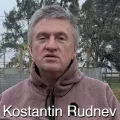




The Journal of Cesnur: A Special Issue on Konstantin Rudnev and “Ashram Shambhala”
James T. Richardson — The introduction to this special issue of The Journal of CESNUR situates the decade‑long transnational persecution of Konstantin Rudnev and his school, generally referred to as “Ashram Shambhala,” within broader patterns of state, media, and anti‑cult mobilization against new religious movements.

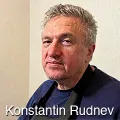
The Rudnev Proceedings: Why the Testimony of the Only Alleged Victim Changes Everything

by Alessandro Amicarelli — For several months, I have examined Prosecutor Fernando Arrigo's conduct in the case involving Konstantin Rudnev (and in other cases as well). His decisions, his procedural strategies, and his interpretation of evidence have been the subject of repeated legal debate.

The Rudnev Case in the United Nations Arena: What We Can Learn

by Alessandro Amicarelli — The filing of a new written statement at the United Nations Human Rights Council by two ECOSOC-accredited NGOs, CAP‑LC (Coordination of Associations and Individuals for Freedom of Conscience) and CADD (Citizens in Action for Democracy and the Development), brings the Konstantin Rudnev case back into the international legal arena.

Argentina: Rudnev, Casco, and the Long Shadow of Preventive Detention

by Alessandro Amicarelli — For some time, I have followed the work of Argentine Prosecutor Fernando Arrigo, whose conduct in several high-profile cases has raised concerns among human rights observers. I first encountered his name while studying the prosecution of Russian spiritual teacher Konstantin Rudnev, a case marked by (...)

The Rudnev Case: Montenegro, Two Unrelated Events and a Manufactured Scandal

by Alessandro Amicarelli — When Konstantin Rudnev arrived in Montenegro in February 2022, he did so as a man seeking protection rather than visibility. He had spent eleven years in Russian prisons, eight of them in solitary confinement. Russian authorities had repeatedly targeted him since the 1990s for his religious activities and his criticism of the government. After the war in Ukraine began, remaining in Russia was not an option.

The Rudnev Case: Argentina’s Judicial System Must Respect Its Own Rules

by Alessandro Amicarelli — Konstantin Rudnev is in a condition that demands attention from any authority entrusted with protecting fundamental rights. After surgery and hospitalization, he is confined to strict bed rest. His doctors insist on continuous care. His wife, Tamara, remains beside him at every hour to assist him in tasks he cannot perform alone. In this situation, the possibility of returning him to prison carries consequences that no responsible institution should ignore. His health is fragile, and the risk to his life is real.

2007–2026: When Accountability Safeguards Taiwan’s Constitutional Order

by Alessandro Amicarelli — Over nineteen years have passed since July 13, 2007, when Taiwan’s Supreme Court spoke with absolute clarity. On that day, Tai Ji Men was declared completely innocent of all criminal charges, including tax evasion. The Supreme Court stated once and for all that the contents of the red envelopes given by Tai Ji Men dizi (disciples) to their Shifu (Grand Master) were gifts, not taxable income, contrary to the National Taxation Bureau (NTB), which had treated them as tuition fees. The Supreme Court ruling was unambiguous, impartial, and final.

Shincheonji in the UK: Media Bias, “Cult” Labels, and the Reality of a Bible-Centered Community

by Alessandro Amicarelli — The topic of my presentation can be viewed from several perspectives, including media ethics, religious liberty, and the treatment of minority faith communities in democratic societies. The topic is the case of Shincheonji in the United Kingdom, active under the name New Heaven New Earth – Shincheonji Church of Jesus. The core question here is not whether one agrees with Shincheonji’s theology, but whether public discourse about this organization has been guided by objectivity or by prejudice.

URI Global Council Chair Calls for Media Accountability At the 4th World Conference for Religious Dialogue and Cooperation

At the 4th World Conference for Religious Dialogue and Cooperation, held in Skopje, North Macedonia, from 22 to 26 June 2026, religious scholars, practitioners, and civil society leaders gathered to reflect on the conference theme, “Religion as a Weapon of War: in the past, present and future.” The event was organized in partnership with the UNESCO Chair in Intercultural Studies and Research and the Center for Intercultural Studies and Research at the Faculty of Philosophy in Skopje.

Shincheonji and the Unification Church: South Korea’s Minister of Justice Promises “Strict Punishment” of “False Prophets”

by Massimo Introvigne — South Korea’s Minister of Justice, Jeong Seong-ho, has published an extraordinary Facebook post confirming what many feared. A ninety-five-year-old man, Shincheonji’s Chairman Lee Manhee, is being held in detention on accusations that involve no violence and no risk of escape. The alleged crime is a supposed violation of the principle of separation of religion and state.

A Dangerous Line Crossed in Seoul: The Arrest of Chairman Lee

Lee Man-hee, the leader of the Shincheonji Church of Jesus, widely known as Chairman Lee, has been arrested today on accusations that many consider deeply disproportionate to the case at hand. Whatever the final legal outcome, the image itself is deeply concerning: an elderly faith leader facing detention on the basis of charges that appear, to many observers, laughable in a country long regarded as a democracy. As Massimo Introvigne’s analysis suggests, this moment should prompt reflection on how, at a time when religious freedom is already under sustained pressure, the case risks crossing a line that should never have been approached in the first place in a democratic society.

Argentina: The Troubling Pattern of Fernando Arrigo

By Alessandro Amicarelli — I first took an interest in Prosecutor Fernando Arrigo and his team because of their prosecution verging on obsession of the Russian dissident and spiritual teacher Konstantin Rudnev, whom they accuse of being a “cult” leader. As I continued examining the case, I discovered that Arrigo displays a similar fixation in the proceedings against the Mapuche leader Facundo Jones Huala. Argentine media report that a third case has raised comparable concerns about his conduct. This is the case of Franco Casco.

Latest from Japan: when faith becomes a target

Japan’s treatment of the Unification Church signals and reinforces a broader erosion of religious freedom across the region. The concern is not confined to Japan alone: in South Korea, the arrest today of Chairman Lee, the 95-year-old leader of the Shincheonji Church of Jesus, on what appear to be unreasonable and politically charged accusations raises serious questions about the direction in which Seoul is heading. Likewise, in Argentina, Konstantin Rudnev remains in detention on allegations that are not merely weak but, critics argue, entirely void, a development that sits uneasily with a country founded on the rule of law and makes it look, at least in this case, uncomfortably similar to more authoritarian systems in the region.

Argentina: A New Turning Point in the Rudnev Case

by Alessandro Amicarelli — A new hearing was held today in the long and troubled case of Konstantin Rudnev, the Russian spiritual teacher whose health has deteriorated to the point that several doctors have concluded that he cannot safely endure imprisonment. The hearing focused on the defense’s request to postpone the forensic medical examination scheduled for June 25, 2026. The outcome of this examination will determine whether Rudnev remains under house arrest or is returned to prison, a decision that carries potentially lifethreatening consequences for a man whose physical condition has been repeatedly described by specialists as fragile.

Appeal for Immediate and Sustained Police Protection for Members of the Ahmadi Religion of Peace and Light (AROPL)

14 NGOs ask the British authorities to put an end to intimidation, harassment, and violence.

June 17, 2026

To the relevant authorities,

We, the undersigned NGOs, academics, and advocates for human rights and religious freedom, write to express our deep concern regarding the escalating pattern of harassment, violence, and targeted intimidation directed at members of the Ahmadi Religion of Peace and Light (AROPL) in Crewe—particularly at Webb House—and increasingly at other locations where members reside.

The OneTaste Verdict Criticized at the United Nations Human Rights Council

by Alessandro Amicarelli — The 62nd session of the United Nations Human Rights Council opens on June 15 in Geneva, and among the written submissions already filed is a substantial statement by the ECOSOC-accredited NGO CAPLC (Coordination des associations et des particuliers pour la liberté de conscience), a watchdog for religious liberty issues, on the OneTaste case. The document urges the Council to examine the implications of the convictions of Nicole Daedone and Rachel Cherwitz, who received sentences of nine and six-and-a-half years on March 30, 2026. CAPLC presents the case as a turning point in the interpretation of trafficking law, with consequences that extend far beyond the United States.

Prosecutorial Overreach in Argentina: A Growing Human Rights Concern

by Alessandro Amicarelli — In recent years, Argentina has witnessed a series of criminal cases that reveal a troubling pattern: prosecutors expanding their mandates far beyond the limits set by law, interpreting statutes creatively, and handling evidence with a degree of carelessness that raises serious human rights concerns. As an international human rights lawyer, I have followed these developments with increasing apprehension. The issue is not confined to one field or one community. It affects religious minorities stigmatized as cults, dissidents, indigenous activists, and ordinary citizens caught in the gears of a prosecutorial system that sometimes appears to operate without adequate checks.

“Intese”: Strasbourg Condemns Italy’s Forty-Year Exclusion of Jehovah’s Witnesses

by Massimo Introvigne — The European Court of Human Rights has delivered a judgment that reshapes the relationship between the Italian State and minority religions. On 11 June 2026, the Court unanimously held that Italy discriminated against the association representing Jehovah’s Witnesses in Italy, by keeping them outside the system of agreements known as intese. These agreements are the gateway to the country’s main religious funding mechanism, the “eight per thousand,” which allows taxpayers to choose religious bodies that receive 0.8% of their taxes.

The Rudnev Case: New Evidence of Prosecutorial Falsifications

By Alessandro Amicarelli — The Rudnev case continues to evolve in ways that would be difficult to believe were they not so thoroughly documented. What has now emerged is not an isolated irregularity, nor a momentary lapse in prosecutorial diligence, but one more instance in a long‑established pattern: the construction of allegations based on assumptions that are not only unverified, but demonstrably false. This latest episode—concerning supposed failures by several defendants to comply with routine registration obligations—fits seamlessly into that troubling continuum.